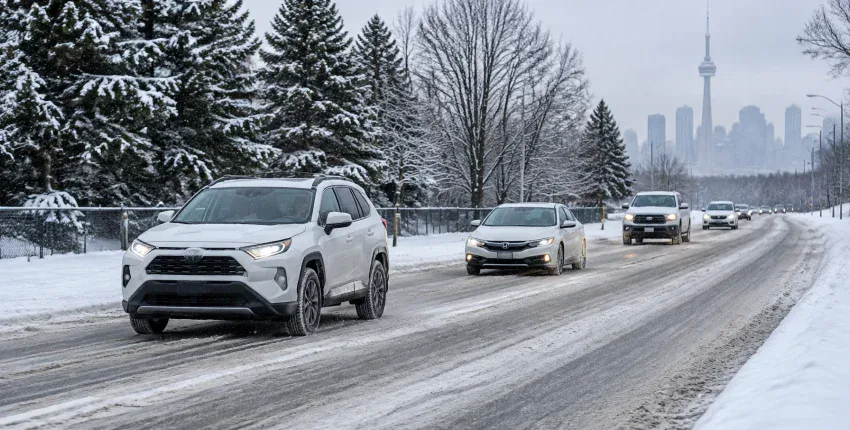
Winter roads in Mississauga and across the GTA can be tough on vehicles.
Snow and slush can collect around the wheels. Road salt can stick to the underside of the vehicle. Freezing temperatures can affect fluids, batteries, tires, and other components. Then there are potholes and rough patches that often become more noticeable after repeated freezing and thawing.
Your vehicle is built to handle winter conditions, but that does not mean those conditions have no effect.
Understanding what happens to your vehicle during winter can help you recognize when it needs attention.
What Does Road Salt Actually Do to a Car?
Road salt is used to help melt ice and improve traction, but it can contribute to corrosion when it accumulates on metal surfaces.
The underside of your vehicle is particularly exposed. Salt and salty water can reach areas around suspension components, brake components, exhaust components, fasteners, and other metal surfaces.
Corrosion usually develops gradually. You may not notice it after one snowy commute, but repeated exposure over multiple winters can take its toll.
That is one reason keeping the underside of your vehicle reasonably clean during winter can be helpful.
Snow and Slush Can Get Into Unexpected Places
Snow is not usually a problem simply because it touches your car. The bigger issue is what happens when snow and slush accumulate and then melt or freeze.
Slush can collect around wheel wells, suspension areas, and other parts of the vehicle. As temperatures change, that moisture can repeatedly freeze and thaw.
Heavy buildup around the wheels can also affect how smoothly they turn or create unusual noises.
If you notice an unfamiliar sound after driving through heavy snow, it is worth checking whether snow or ice has accumulated around the vehicle rather than assuming the noise is harmless.
Your Brakes Get a Lot of Winter Exposure
Braking components are exposed to water, salt, dirt, and changing temperatures throughout the winter.
Surface rust can sometimes appear after a vehicle sits in wet conditions, particularly on exposed brake rotor surfaces. That can be different from deeper corrosion or a brake system problem.
Pay attention to changes in braking behaviour.
Grinding noises, persistent squealing, vibration during braking, pulling to one side, or changes in pedal feel are all reasons to have the braking system inspected.
Winter is not a good time to ignore a change in how your vehicle stops.
Tires Have to Deal With More Than Snow
Winter driving can mean wet pavement, packed snow, slush, ice, and rapidly changing road conditions.
Your tires need adequate tread and proper inflation to perform as designed. Cold temperatures can lower tire pressure, so checking pressure regularly becomes especially important.
If you use winter tires, inspect their condition before and throughout the season. Look for uneven wear, damage, or other signs that may affect performance.
Remember that all-wheel drive can help a vehicle put power to the road, but it does not eliminate the need for appropriate tires.
Potholes Can Hide Under Snow and Slush
Winter roads can make potholes difficult to see.
Repeated freezing and thawing can contribute to changes in pavement condition, while snow and standing water can conceal what is underneath.
Hitting a pothole can affect more than the tire. Depending on the severity of the impact, it can also affect wheels, suspension components, steering components, and wheel alignment.
After a significant impact, pay attention to changes such as:
- The vehicle pulling to one side
- A steering wheel that no longer sits straight
- New vibrations
- Unusual noises
- Visible tire or wheel damage
- Changes in handling
If something feels different after hitting a pothole, having the vehicle inspected can help identify the cause.
Your Windshield Takes a Beating
Winter road spray can quickly cover your windshield with a mixture of salt, dirt, and slush.
That makes good wiper blades and sufficient washer fluid particularly important.
Old wipers may smear the windshield instead of clearing it. A washer reservoir filled with summer-grade fluid may also be unsuitable for freezing temperatures.
Before winter gets into full swing, check your wipers and use washer fluid rated for the temperatures you expect.
And never pour hot water onto a frozen windshield. A sudden temperature change can damage the glass.
The Exhaust System Can See Extra Moisture
Your exhaust system is exposed to water, salt, snow, and road debris.
Short trips can also allow moisture to accumulate within the exhaust system because the vehicle may not reach the operating conditions needed to evaporate it fully.
Winter corrosion can affect exhaust components over time. If you notice a new rattling sound, unusual exhaust noise, or an exhaust smell inside the vehicle, have the system inspected.
An exhaust issue is not something to ignore, particularly if fumes may be entering the passenger compartment.
The Battery Faces Colder Starts
Winter does not only affect what happens on the road. It can also make starting the vehicle more demanding.
Cold temperatures can reduce battery performance while the engine may require more effort to crank.
If your vehicle already has a weak battery, the first prolonged cold spell can expose the problem.
Slow cranking, repeated starting difficulties, dimming lights, or the need for frequent boosts are signs that the starting and charging system deserves attention.
Don’t Forget the Undercarriage
One of the least visible areas of your vehicle can receive some of the most winter exposure.
The underside encounters salty water, slush, snow, dirt, and road debris. Components underneath the vehicle can therefore be vulnerable to corrosion and accumulated grime.
Regularly washing your vehicle during winter, including an appropriate underbody rinse when available, can help remove accumulated road salt.
A wash does not stop corrosion entirely, but reducing salt buildup can be a useful part of winter vehicle care.
A Little Winter Maintenance Goes a Long Way
You cannot control the weather or eliminate every hazard on a winter road. What you can do is keep an eye on how your vehicle responds to changing conditions.
Check tire pressure regularly. Keep the windshield clean. Pay attention to new noises or changes in handling. Keep up with scheduled maintenance and have unfamiliar warning signs investigated.
If your vehicle has been exposed to heavy salt or has taken a hard pothole impact, an inspection can also provide an opportunity to identify problems that may not be obvious from the driver’s seat.
Prepare Your Vehicle for the GTA Winter
Snow, slush, salt, and freezing temperatures are all part of driving through a Canadian winter. Your vehicle can handle these conditions, but regular attention can help keep winter wear from turning into a bigger maintenance concern.
If you are in Mississauga or the surrounding GTA, NewCastle Auto Repairs can help you prepare your vehicle for winter and inspect concerns related to brakes, tires, suspension, batteries, and other components.
Schedule a winter inspection with NewCastle Auto Repairs and make sure your vehicle is ready for the roads ahead.